Cry Babies
- 4.1
- Rating
- 10.00M
- Installs
- Free
- Price
 Analysis by App-foxy
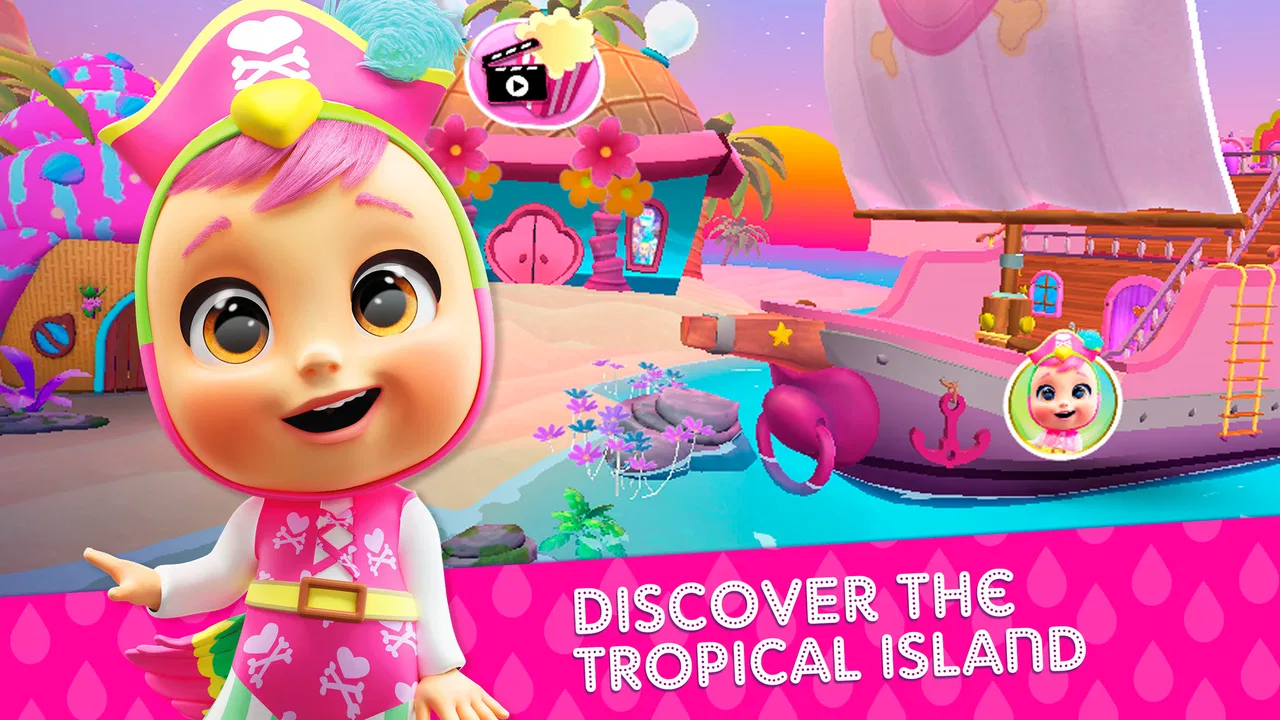
When I first opened Cry Babies Magic Tears, I immediately understood its appeal: it is a gentle, character-led game aimed at children who already enjoy the Cry Babies world and want something interactive rather than another passive video. I found it easy to approach, colorful without being difficult to read, and simple enough for a young child to explore with a little guidance. It sits in the educational game category, although I would describe its learning value as light and play-based rather than comparable to a dedicated reading, mathematics, or language-learning app.
The game is free to download, carries an Everyone age rating, and comes from IMC Toys. That combination makes it a natural candidate for a shared family tablet or a child’s first independent game. Still, “free” should be read carefully: optional in-app purchases range from $0.99 to $29.99 per item. I would let a child explore it only after an adult has checked the purchase settings, especially if the device is shared with siblings.
What the current version feels like to use
The current release is version 3.10.2, and my overall impression is that the app is designed around short, low-pressure play sessions. It does not demand the concentration or reading ability expected by more advanced educational titles. Instead, it uses familiar characters, visual prompts, and simple interactions to keep a child involved. That makes it suitable for a few minutes of play while waiting at an appointment, winding down before dinner, or taking a quiet break between more structured activities.
You May Also Like

 Blood Strike: 2.5 Anniversary
Blood Strike’s Loadouts Turn Every Drop Into a Tactical Gamble
A close look at Blood Strike’s custom loadouts: how fast access to signature weapons reshapes its battle royale rhythm, rewards preparation, and narrows the gap between fights.

 Pandora - Music & Podcasts
Pandora’s Music Is Easy to Start, but Harder to Recover
Pandora’s strength is its low-effort path from a seed to a station. Its weak spot is how much confidence it asks you to place in connection, setup, and quiet recovery.

 8 Ball Pool
 Is Built on Rivalries, Rematches, and Routine
A close look at the rivalries, rematches, shared routines, and unanswered safety questions that turn a quick pool match into a persistent mobile community.

 Samsung Music
’s Quiet Strength Is Playing What You Already Own
Its reach comes less from spectacle than from dependable access to a personal library. That simplicity is both the app’s strongest retention engine and its ceiling.

 AccuWeather: Weather Radar
AccuWeather Review: A Quick, Clear Forecast for Everyday Decisions
For everyday plans, the best forecast is the one you can understand quickly. AccuWeather makes rain timing, radar, and local conditions easy to act on, with a few trade-offs.

 Hill Climb Racing
Why Hill Climb Racing Still Turns Crashes Into One More Run
A tiny car, a bumpy hill and one more upgrade: Hill Climb Racing keeps resurfacing because its simple chaos makes every near-miss feel personal.
More From Our News Desk



I would not install it expecting a complete curriculum. The strongest reason to choose it is emotional familiarity. A child who recognizes the Cry Babies characters is more likely to try the activities willingly than they might be with an unfamiliar educational app. That matters in everyday use: when a child is tired or reluctant to practise a new skill, a recognizable theme can lower the barrier to starting.
The game has reached over ten million installs, so it is clearly not a niche experiment. Its average rating is 3.9 from roughly seventeen thousand ratings, with about two hundred written reviews. I read that combination as a useful warning against exaggerated expectations. Many families evidently find enough value to keep it installed, but the score also suggests that the experience may not satisfy every child or every parent equally.
A better fit for short sessions than long lessons
In my experience, the app works best when I treat it as a small activity rather than a substitute for schoolwork. A child can open it during a short break, complete a few interactions, and leave without feeling that they have failed to finish a large lesson. That short-session design is helpful for younger players whose attention changes quickly.
There is also a practical advantage for adults: I do not need to explain a complicated control system before handing over the device. I would still sit with a child the first time, not because the game is especially difficult, but because young players often tap through prompts quickly and may need help understanding what each screen is asking them to do.
One useful routine is to play alongside the child and ask them to describe what they see instead of simply solving every activity for them. With a character-based game like this, that can turn a few minutes of tapping into a small conversation about colors, objects, choices, and sequences. The app provides the prompt, while the adult adds the deeper language practice that the game itself may not provide.
What the educational label means here
I think the educational label is fairest when understood as guided discovery and basic interaction. The game can encourage recognition, attention, following instructions, and persistence. Those are real benefits, but they are not the same as systematic phonics, arithmetic progression, handwriting practice, or a carefully staged language course.
That distinction is important when comparing it with alternatives. A dedicated preschool learning app is usually a better choice if the main goal is measurable progress in letters or numbers. A creative drawing app may offer more freedom for children who dislike guided activities. A video app may be easier for passive entertainment, but it gives the child less to do. Cry Babies Magic Tears occupies the middle ground: more interactive than watching a show, but lighter and more character-focused than formal learning software.
How the product has evolved and what that means
The app first appeared on August 26, 2020, and version 3.10.2 shows that it has continued beyond its original release. I see that as a positive sign for existing users because a maintained app is more reassuring than one that feels abandoned after launch. At the same time, a version number by itself does not tell me that every update changed the core experience. I would separate the confirmed fact of the current version from any expectation that it has been completely redesigned.
For a new player, the practical result is straightforward: install the current release rather than judging the game by memories of an older build or by early impressions from launch. For an existing family, updating may be sensible for compatibility and general maintenance, but I would not promise a child that an update will transform the game into a different type of educational product. Its central appeal remains the Cry Babies setting and accessible play.
This is where the developer matters. IMC Toys has a strong reason to keep the digital experience connected to the characters children already know, and that helps explain why the app feels more like an extension of a toy and entertainment universe than a standalone academic tool. I think that focus is both its identity and its limitation. It gives the game a clear personality, but it also means parents looking for broad subject coverage may outgrow it quickly.
The effect on children who already know the characters
For an existing Cry Babies fan, the familiar world can make the first session feel immediately understandable. The child does not have to learn a new theme and a new interaction style at the same time. I noticed that this kind of continuity can be especially useful when introducing a child to a tablet activity: the characters provide an emotional anchor, while the adult can concentrate on explaining safe device habits.
There is a less obvious trade-off, though. Familiarity can encourage repeated play even when the learning challenge is no longer fresh. If a child returns mainly to see the same characters rather than to practise a skill, the app may become entertainment with an educational flavor. I would watch for that by asking the child what they are doing and occasionally suggesting a different activity away from the screen.
Another practical point is that the game is free at the starting point but includes paid items. I would establish a simple household rule before the first session: the child can explore, but any purchase requires an adult. This is more effective than explaining the rule after an accidental tap. On a shared device, I would also check that the store account is not set to complete purchases too easily.
Where the app still leaves room for improvement
The biggest gap for me is depth. Children who want a clear sense of progression may find the experience less satisfying than an app built around levels, lessons, or a visible learning path. I also would not choose it as the only digital activity for a child who needs targeted support with a particular school skill. The character theme may attract attention, but attraction alone does not guarantee sustained educational development.
The other limitation is audience specificity. This is not the right pick for every child in the Everyone age range. Some children will enjoy the characters and gentle pace; others may prefer puzzles with a stronger challenge, open-ended construction, music creation, or a story they can control more directly. Parents should judge the child’s interests rather than assuming that an age rating predicts enjoyment.
I would also be cautious about using it as a reward for every small task. Because the game is easy to access and visually inviting, it can become the default answer whenever a child is bored. A better approach is to give it a defined place in the day, such as a short activity after homework or during travel, and then move on to physical play, books, or conversation.
Three ways I would get more value from it
Use it as a conversation starter, not a babysitter. I would sit nearby during the first sessions and ask the child to name objects, explain a choice, or predict what might happen next. This adds language practice that a basic tap-based interaction cannot provide on its own.
Set a stopping point before opening the app. Young children often handle transitions better when the ending is announced early. I would say how long the session will last, let the child finish a natural interaction, and then close the game rather than waiting for frustration to build.
Match it to the child’s existing interests. If the child loves the Cry Babies characters but struggles with independent tablet use, I would use the app as supervised practice. If the child is already comfortable with simple games and wants harder challenges, I would compare it with a more structured educational alternative instead of pushing this one beyond its intended role.
A fourth useful approach is to keep the app in rotation rather than making it the only favorite. I would place it alongside a storybook, a drawing activity, and a more focused learning game. That way, its strengths—recognition, approachable play, and character motivation—support a broader routine instead of carrying the entire educational burden.
Questions I would answer before installing
Is it suitable for a young child? The Everyone rating makes it broadly accessible, but age suitability is not the same as independent suitability. I would still introduce it with an adult nearby, particularly if the child cannot yet read prompts or understand purchase screens.
Does it work for learning? Yes, in a limited and informal sense. I see value in attention, recognition, following simple directions, and talking through choices. I would choose another app if my priority were a planned course in literacy, mathematics, spelling, or another specific subject.
Will it remain interesting for a long time? That depends heavily on the child’s attachment to the Cry Babies world. Fans may return more often than children who do not know the characters. I would expect short bursts of interest rather than guaranteed long-term engagement for every player.
Does free mean there is no spending risk? No. The download is free, but individual in-app purchases run from $0.99 to $29.99. I would review the device’s purchase controls before allowing unsupervised play.
Should an older child use it? They can, but the appeal may fade if they want complex challenges or a stronger learning structure. The app is most convincing for younger children and fans of the characters, not for learners seeking advanced content.
My recommendation after using it
I recommend Cry Babies Magic Tears as a light, character-driven educational game for families who want something more interactive than watching a cartoon and less demanding than a formal learning course. Its free entry point, Everyone rating, and familiar theme make it easy to try, while the current version suggests that the app remains in active circulation rather than being a forgotten release.
My recommendation comes with boundaries. I would supervise the first use, protect purchases, keep sessions reasonably short, and avoid presenting it as a complete educational solution. The best results come when an adult turns the game’s simple interactions into conversation and then connects them with offline activities.
If your child already enjoys Cry Babies, this is a sensible companion experience and a friendly way to make a short tablet session feel purposeful. If you are searching for deep academic instruction, demanding puzzles, or a broad curriculum, I would choose a more specialized alternative. The app succeeds most when it is treated as a playful bridge between familiar characters and gentle learning, not as a replacement for richer learning tools.
FAQs for Cry Babies
01What is the main objective of the Cry Babies app?
The Cry Babies app is designed to provide an interactive and entertaining experience for children. The main objective is to engage users with fun activities, games, and stories featuring the beloved Cry Babies characters. It helps children develop creativity and problem-solving skills through various interactive features.
02Is the Cry Babies app suitable for all age groups?
The Cry Babies app is primarily designed for young children, typically aged 3 to 8 years. It features age-appropriate content that is easy to understand and interact with. Parents should review the app to ensure it aligns with their child’s developmental stage and interests before downloading.
03Does the Cry Babies app contain in-app purchases?
Yes, the Cry Babies app may include in-app purchases. These purchases can unlock additional content, features, or games within the app. Parents are advised to monitor and manage in-app purchase settings on their devices to prevent unauthorized transactions by children.
04Can the Cry Babies app be used offline?
Some features of the Cry Babies app might be available offline, but for a full experience, including updates and additional content, an internet connection is recommended. Users should check specific app requirements and settings to determine which features require connectivity.
05Is the Cry Babies app available on both Android and iOS devices?
Yes, the Cry Babies app is available on both Android and iOS platforms. Users can download it from the Google Play Store for Android devices and the Apple App Store for iOS devices. Always ensure your device meets the app’s system requirements for optimal performance.
Pros
- Engaging and colorful graphics.
- Simple controls suitable for kids.
- Variety of mini-games available.
- Encourages creativity and imagination.
- Regular updates with new content.
Cons
- In-app purchases can add up.
- Requires internet for some features.
- May have occasional ads.
- Limited educational content.
- Some features need premium access.

Cry Babies
Gallery